Ever had that craving for a frosty, thick smoothie on a sweltering day, only to stare at your compact personal blender with a sense of doubt? You’re not alone. The big question on everyone’s mind is, “Can this little powerhouse actually handle solid ice?” If you’re wondering how to crush ice with a personal blender without turning your kitchen into a disaster zone or burning out the motor, you’ve come to the right place. We’re about to dive deep into the art and science of turning ice cubes into perfectly smooth, sippable bliss. Whether you’re trying to replicate one of those trending TikTok blender recipes or just need a simple post-workout shake, getting the ice right is everything.
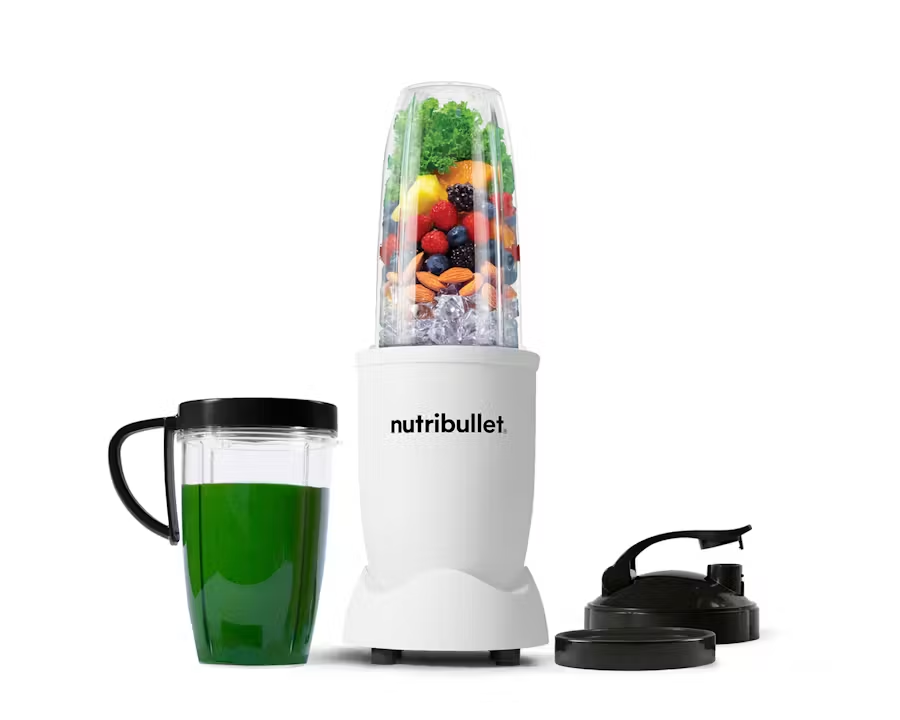
So, Can You Really Crush Ice with a Personal Blender?
Let’s get straight to it: Yes, you absolutely can crush ice with most modern personal blenders, but it’s all about technique and having the right machine. Unlike their bulky countertop cousins built like tanks, personal blenders are designed for convenience and smaller portions. Trying to crush ice without the proper method is like trying to chop down a tree with a butter knife—it’s frustrating and you’ll probably break something.
The key is to work with your blender, not against it. Many people make the mistake of dumping in a handful of large, dry ice cubes, hitting “blend,” and hoping for the best. This often results in a terrifying clanking noise, a stalled motor, and chunky, unappetizing ice shards. But don’t worry, we’ll fix that.
The Right Technique: Your Step-by-Step Guide to Crushing Ice
Forget brute force. Crushing ice in a personal blender is a game of finesse. Follow these steps, and you’ll achieve a smooth, consistent texture every single time.
- Liquid First, Always: This is the golden rule. Pour your liquid base (water, milk, juice, etc.) into the blender cup first. You need at least enough to cover the blades. The liquid creates a vortex that pulls the solid ingredients down into the blades, preventing them from just bouncing around on top.
- Size Matters: Don’t use massive ice cubes straight from the freezer tray. If you can, use smaller cubes, or give your larger cubes a quick whack in a zip-top bag with a rolling pin to break them up a bit. Smaller pieces are much easier for the motor to handle.
- The Golden Ratio: Don’t overcrowd the cup. A good rule of thumb is a 1:2 ratio of ice to liquid. For every one part of ice, you should have about two parts of liquid and other ingredients. This ensures everything can move freely.
- Layer Like a Pro: After the liquid, add your softer ingredients like fresh fruit, powders, and greens. Finally, add your smaller ice cubes on top. This layering technique helps weigh the ice down and eases it into the blades.
- Pulse, Don’t Just Blend: Instead of holding down the blend button and praying, use the pulse function. Press the button for 1-2 seconds, release, and repeat. Do this 5-6 times. This action works like a jackhammer, breaking down the large ice chunks into smaller, more manageable pieces before the full blend.
- Full Power Blend: Once the initial crushing is done, you can then blend continuously for 30-60 seconds until you reach your desired smoothness. If you hear the motor straining, stop, give the cup a good shake to redistribute the contents, and then continue.
Not All Personal Blenders Are Created Equal: Key Features for Crushing Ice
If you’re in the market for a new machine or wondering if your current one is up to the task, here are the non-negotiable features you need for superior ice-crushing performance.
- Motor Power (Wattage): This is the engine of your blender. For effectively crushing ice, look for a personal blender with at least 600 watts, though 900 watts or more is ideal. A lower-wattage motor will struggle and is more likely to overheat or burn out.
- Strong, Well-Designed Blades: It’s not just about sharpness. The best blades are made from high-quality stainless steel and often feature a multi-pronged design. Look for blades that have both sharp edges for chopping and dull edges for pulverizing to create a smooth, even texture.
- Durable Blender Cup: The intense pressure and cold temperature from crushing ice can damage flimsy plastic. Opt for a blender cup made from BPA-free Tritan plastic, which is incredibly tough, shatter-resistant, and won’t absorb odors or stains.
- A Pulse Function: As we discussed, the ability to pulse is crucial. It gives you control and allows you to break down tough ingredients without putting continuous strain on the motor.
“A powerful motor is the heart of a good ice-crushing personal blender. I always tell my clients to look at the wattage first. A 900-watt blender is the sweet spot for creating silky-smooth, nutrient-packed smoothies from frozen fruits and ice without straining the machine.” – Dr. Alisha Ramos, Nutritionist
Personal Blender vs. Traditional Blender: What’s the Difference for Ice?
It’s a classic showdown. While both can blend, they’re designed for different jobs. Here’s a quick comparison specifically for handling ice.
| Feature | Personal Blender | Traditional Countertop Blender |
|---|---|---|
| Power | Typically 300-1000 watts | Often 1000-1500+ watts |
| Capacity | Single-serve (12-32 oz) | Large batches (48-64 oz) |
| Best For | Smoothies, shakes, small batches | Frozen cocktails, sorbets, large-scale food prep |
| Ice Crushing | Good, with proper technique and the right model | Excellent, can handle large amounts of ice easily |
| Convenience | High (blend-and-go cup) | Lower (requires transferring to another container) |
The bottom line? A high-quality personal blender is more than capable for your daily icy smoothie. A traditional blender just gives you more raw power and capacity for bigger jobs.
Creative Ways to Use Your Personal Blender – Beyond Smoothies
Once you’ve mastered how to crush ice with a personal blender, a world of icy treats opens up. Think beyond the breakfast smoothie!
- Healthy Slushies: Blend fruit juice with ice for a refreshing, low-sugar alternative to store-bought slushies.
- Quick Frappes: Blend cooled strong coffee, milk, a little sweetener, and ice for a coffee-shop-quality drink at home.
- Frozen Cocktails (Single-Serve): Perfect for making a single margarita or daiquiri without hauling out the big blender.
- Savory Gazpacho: This cold Spanish soup is a fantastic use for your blender. For those interested in more savory blender creations, exploring a good salsa recipe blender can provide even more inspiration.
Tips for Cleaning and Maintaining Your Personal Blender
After making your delicious icy creation, don’t let the cleanup kill your vibe. A well-maintained blender will last longer and perform better.
- Immediate Rinse: As soon as you’re done, rinse the cup and blade assembly under warm water. Don’t let the residue dry and harden.
- The 30-Second Clean: Fill the cup halfway with warm water, add a drop of dish soap, screw the blades back on, and pulse for 20-30 seconds. This self-cleaning trick dislodges 90% of the gunk.
- Deep Clean: For a more thorough clean, use a bottle brush to scrub the inside of the cup and around the gaskets of the blade assembly. Most personal blender cups are also top-rack dishwasher safe, but always check your manual.
- Dry Thoroughly: Moisture is the enemy. Make sure all parts are completely dry before reassembling to prevent mildew and unpleasant smells.
Frequently Asked Questions
Can all personal blenders crush ice?
Not all of them. Cheaper, lower-wattage models (under 500 watts) will struggle significantly and may break. It’s essential to check the manufacturer’s instructions and look for a model specifically designed with the power to handle frozen ingredients.
Will crushing ice dull my blender’s blades?
Over a very long period, yes, just like chopping anything will eventually dull a knife. However, high-quality stainless steel blades are designed to withstand this for years. The bigger risk is not the dulling, but the strain on the motor if you use improper technique.
What is the ideal wattage for a personal blender to crush ice?
The sweet spot is between 900 and 1200 watts. This provides ample power to pulverize ice and frozen fruit into a smooth consistency without overworking the motor. A blender with at least 600 watts can get the job done, but you’ll need to be more careful with your technique.
Can I put frozen fruit in my personal blender instead of ice?
Absolutely! Frozen fruit is often easier for a blender to handle than hard ice cubes because it has more water content and a softer structure. The same rules apply: add liquid first and don’t overfill the cup.
Why is my blender leaving chunks of ice?
This is usually caused by one of three things: not enough liquid, overfilling the cup, or not using the pulse function first. Ensure you have a good liquid-to-solid ratio to create a vortex, and always pulse a few times to break up the big pieces before a full blend.
Your Partner in Health
Mastering how to crush ice with a personal blender transforms it from a simple smoothie maker into a versatile tool for your healthy lifestyle. It’s about more than just a cold drink; it’s about the convenience of whipping up a nutritious, refreshing treat in minutes, empowering you to make better choices every day. With the right machine and the right techniques, you can confidently tackle any icy recipe and make your Personal Blender an indispensable companion on your wellness journey.